Today, when people talk about clubbing, the debate almost always centers on line-ups, festivals, or attendance figures. Less often do we ask what role a club might play within contemporary society.
It's a question I consider increasingly central, especially at a historical moment when European cities are progressively losing independent spaces, while cultural institutions struggle more and more to engage new generations with languages, organizational models, and forms of participation that are genuinely contemporary.
It is from this reflection that my interest in the Tempio del Futuro Perduto arises — not so much as a venue dedicated to electronic music, but as an organizational and cultural phenomenon. Beyond aesthetic judgments or musical preferences, I believe the Tempio represents one of the most significant case studies to emerge in recent years within the Italian landscape of independent cultural spaces, because it allows us to observe how a community can transform a former industrial area into a platform capable of producing culture, participation, education, mutualism, and international relations all at once.
This article opens a series of in-depth pieces dedicated to contemporary cultural models that, starting from concrete experiences, will attempt to examine how the relationship between cities, communities, and cultural production is changing. Rather than celebrating individual projects, the goal is to understand how they function, analyze their results, and identify the elements that might serve as a reference point for other realities as well.
History
The Tempio was born as a cultural occupation in 2018, inside a former abandoned tram depot at the Fabbrica del Vapore in Milan. In less than a decade, that space has become one of the country's largest independent cultural communities. According to the data, the project has welcomed over 1.3 million people, built a network of more than 100,000 annual members, and drawn visitors from around 130 countries. Taken individually, these numbers describe the success of an organization. Taken together, they suggest something more interesting: the ability to build a stable community around an independent cultural project.
The Tempio's growth did not come from any particularly significant initial investment, but from a collection of €350 raised to clean up the spaces, which were derelict at the time.
«From a €350 collection to clean up derelict spaces was born one of the country's largest independent cultural communities.»
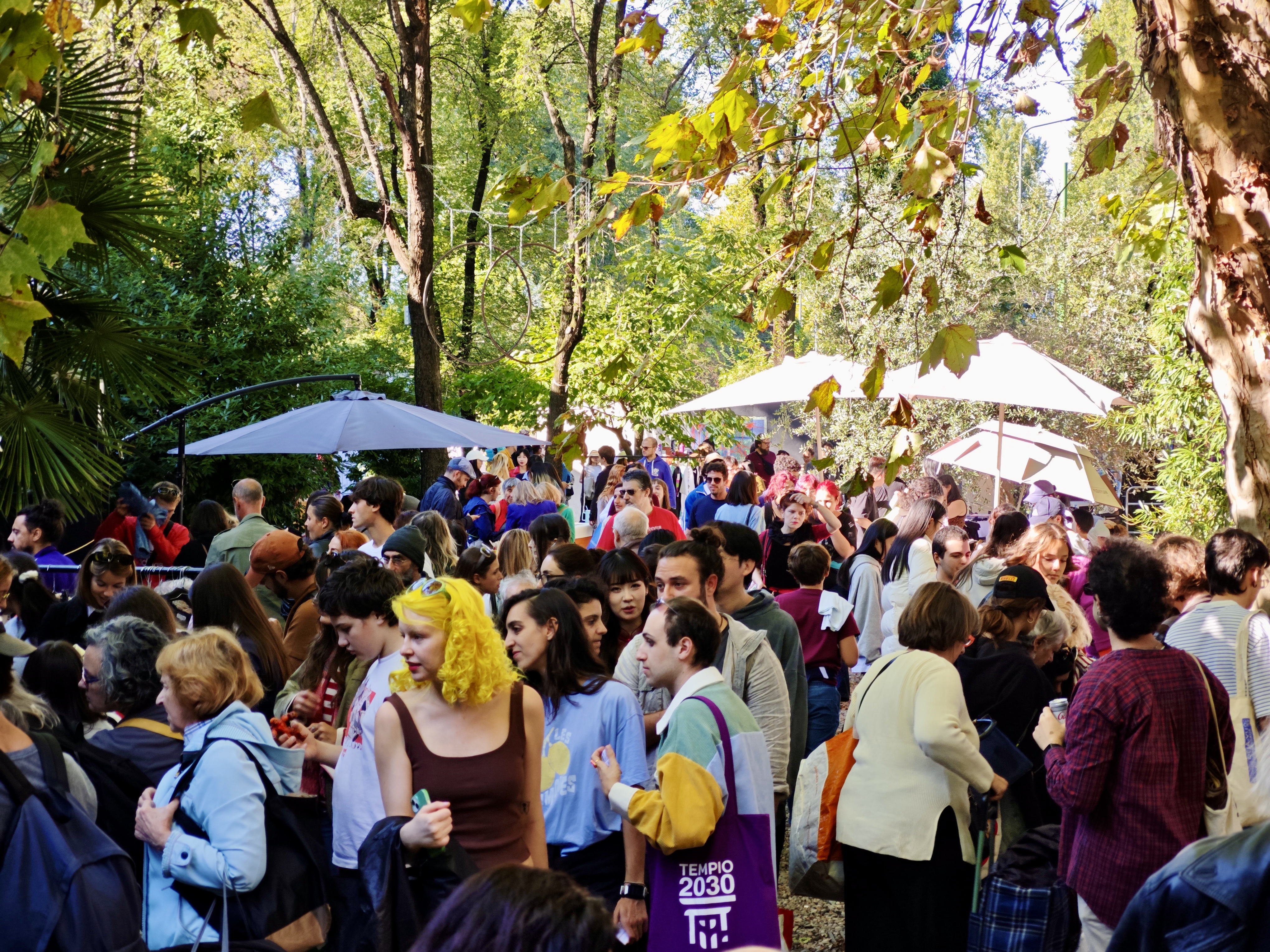
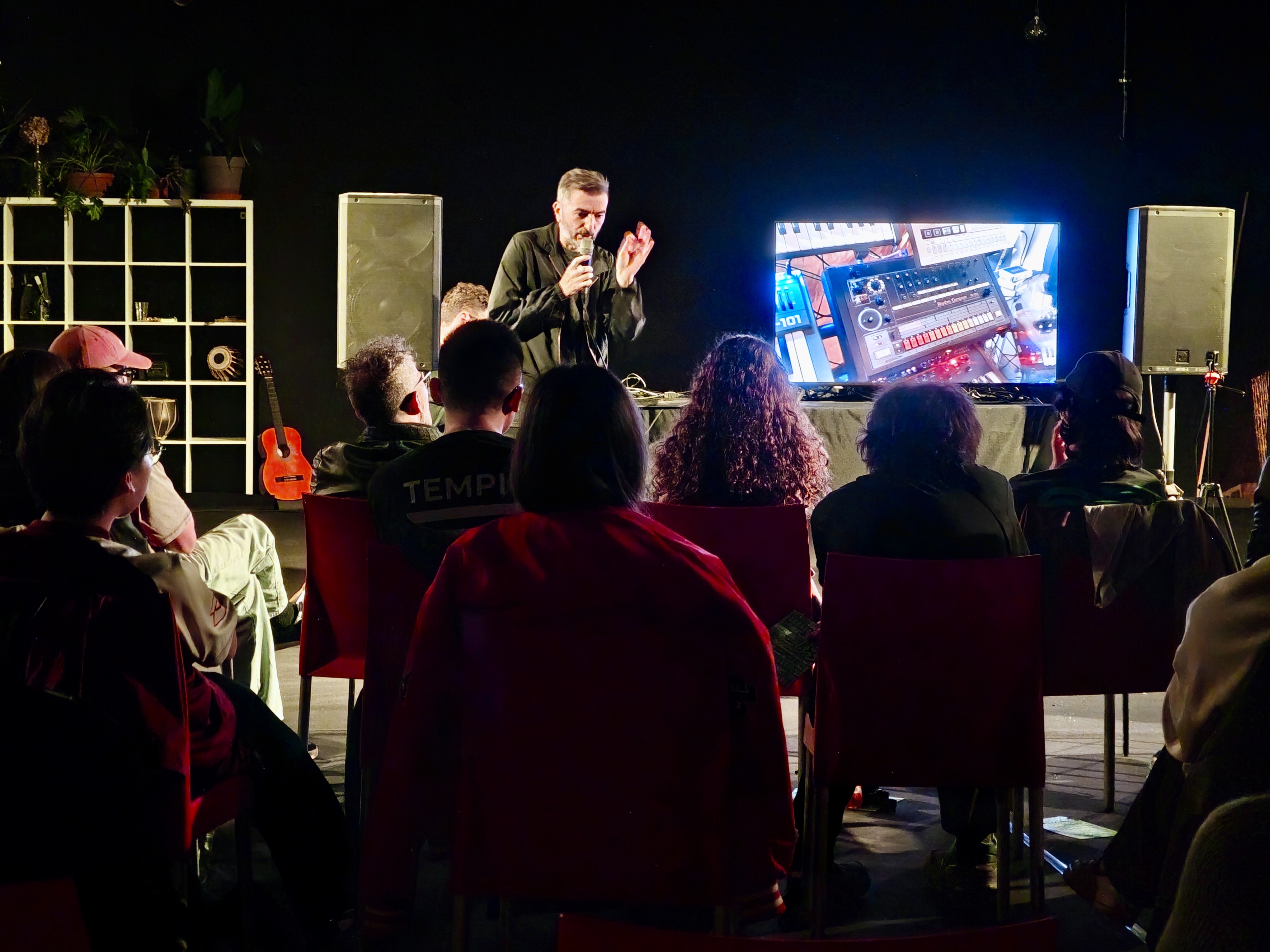
Tempio developed progressively, adding new functions and new levels of complexity over time. Alongside the musical programming came workshops, conferences, publishing projects, training programs, a permanent radio station, activities dedicated to young artists, international solidarity projects, urban regeneration initiatives, and cultural welfare programs. The result is an organization that today operates on a daily basis and uses music as one of its languages, not as its sole identifying element.
A particularly significant aspect concerns the relationship between the Tempio and its own community. In most event venues there is a fairly clear-cut distinction between those who organize and those who attend. Over the years, the Tempio has instead developed a model in which many regulars have become volunteers, organizers, artists, technicians, instructors, communicators, or project leads. The organization's growth has coincided with the growth of the community that sustains it, producing a body of distributed skills that is probably one of its most important resources.
Even in quantitative terms, the project has features that are hard to overlook. Every year the Tempio puts on hundreds of events, talks, workshops, DJ sets, concerts, podcasts, radio recordings, and training activities. At the same time, it develops an ongoing program that spans different disciplines and diverse audiences, maintaining activity spread across the whole week rather than confined to weekends or nighttime hours.
Alongside cultural production, a significant social program has developed over the years. Through the Muro della Gentilezza, more than 700 tonnes of goods have been redistributed, helping support thousands of people and families facing economic hardship. This initiative has been joined by job placement programs, international fundraising drives, partnerships with third-sector associations, environmental activities, and numerous projects dedicated to building networks of solidarity. These are not one-off events, but a permanent part of the project's identity.
Another element worth attention concerns the economic model developed over the years. Tempio has grown without commercial sponsors and without public funding. Its evolution has been made possible mainly by community participation, self-financing, and the ability to reinvest the resources generated by cultural activities into the development of new projects. This model has allowed the organization to progressively broaden its scope while maintaining significant autonomy in its artistic and project choices.
"Tempio has grown without commercial sponsors and without public funding."
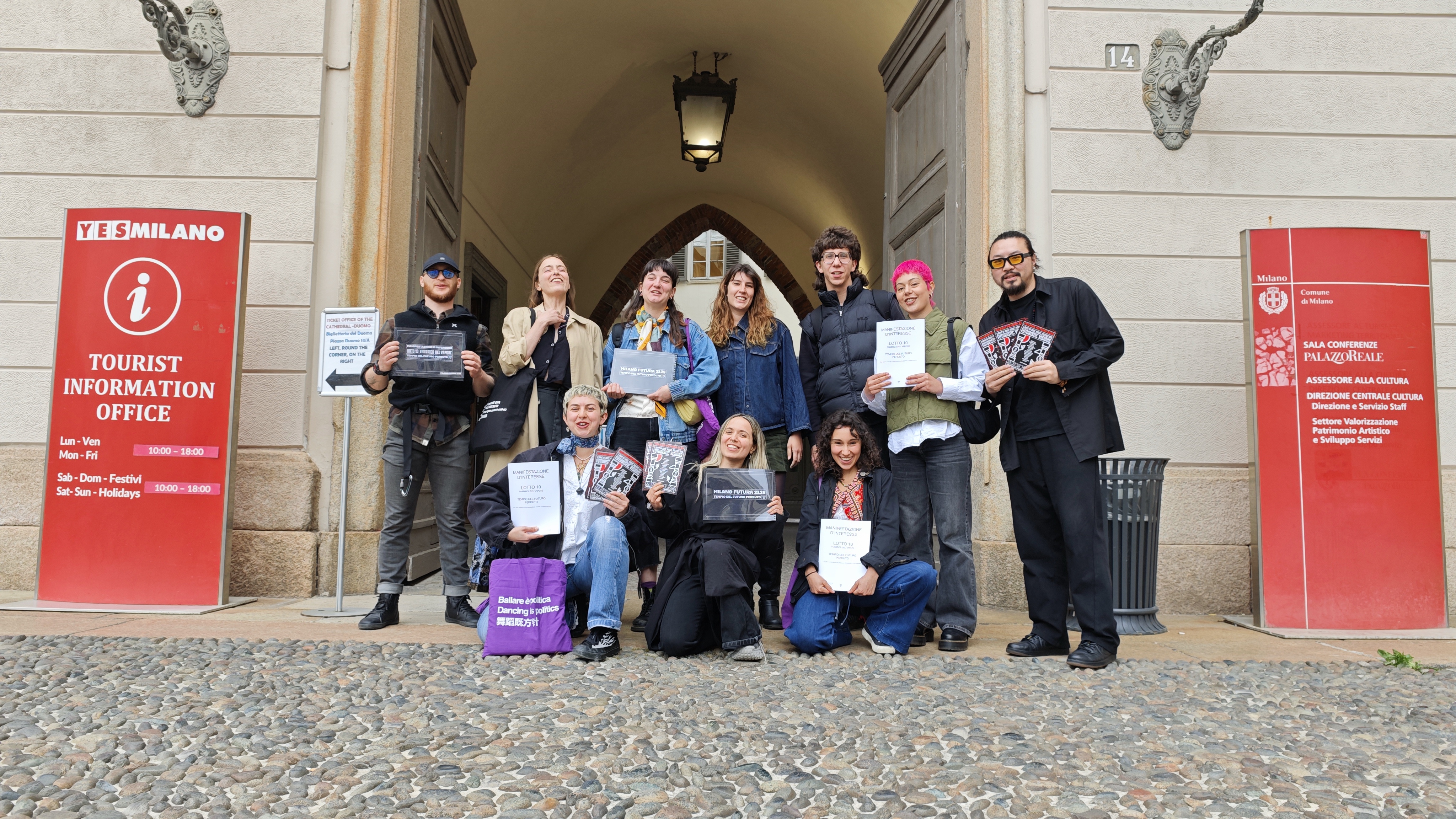
The Tempio's evolution also reached an important milestone on the institutional front. After years of activity, the project earned recognition by winning two public calls issued by the City of Milan, consolidating its presence within the spaces of the Fabbrica del Vapore. It is a result that shows how a grassroots experience managed to become a stable partner of the institutions without losing its independent nature.
In the meantime, the project has continued to build an ever-wider international network. The presence of audiences from around one hundred and fifty countries, collaborations with foreign artists, researchers, collectives, and cultural operators, together with participation in European networks dedicated to independent culture, have progressively placed the Tempio within a context that goes well beyond the scale of a single city. Milan is the physical place where the project operates, but the community built around it now has an international dimension.
The Tempio's case appears particularly relevant because it concentrates, within a single project, characteristics that rarely coexist with this intensity inside one independent cultural organization.
Conclusions
In less than ten years, a former abandoned tram depot has become a community of more than one hundred thousand people, has welcomed more than 1.3 million visitors from around 150 countries, has developed a permanent multidisciplinary program, has redistributed more than 700 tonnes of goods and 600,000 used books through its social programs, and has built a publishing platform, a radio station, training programs, research activities, urban regeneration projects, and an international network of artists and cultural operators.
For the combination of these elements, the Tempio del Futuro Perduto can be considered one of the most significant and original case studies to emerge in recent years within the Italian cultural landscape. Broadening the view to the international context, it represents one of the most articulated experiences in the field of independent cultural spaces — not so much for any single record, but for its ability to integrate, within the same organization, artistic production, community life, social innovation, mutualism, education, urban regeneration, and international cooperation on a scale rarely found in a single project.
The Tempio's story ultimately suggests a broader reflection. For a long time, a club's success has been measured almost exclusively by ticket sales, the fame of the artists hosted, or the quality of its musical programming. This Milanese case shows that such spaces can also be observed through other indicators: the ability to build lasting communities, generate participation, produce culture on an ongoing basis, develop international relationships, activate networks of solidarity, and contribute to the transformation of the areas in which they operate.
It is probably this convergence of results that makes the Tempio del Futuro Perduto a case study of particular interest. Not because it represents a model to be automatically replicated in other contexts, but because it shows how a space born within club culture can evolve to become one of the most significant, complex, and original independent cultural experiences to develop in recent years in Italy, in Europe, and — given the full set of characteristics it manages to bring together — even within the international landscape of contemporary cultural spaces.