"The crisis of the big discos is not an accident, but a reflection of the crisis of an entire economic and cultural model. And today, to survive, the market is trying to turn techno from an underground movement into a simple commercial brand."
In recent years the European big commercial disco sector has been going through one of the deepest crises since its birth.
The decline in attendance, the lack of concrete cultural innovation, the difficulty of building new languages with which to build audience loyalty, the constant rise in operating costs: these have called into question a model that for over forty years has represented the main industry of Western nightlife entertainment.
The situation affects Ibiza as much as the Romagna Riviera, Milan as much as Berlin, London or Barcelona, though it takes on different characteristics in different contexts.
So is clubbing dying? No, quite the opposite.
Interpreting this crisis as a simple consequence of inflation, of the decline in purchasing power, or of changing habits among young people, however, means limiting oneself to the effects without questioning the structural causes. Every economic system in fact also produces a specific cultural form, and when that cultural form loses the capacity to interpret the present, it inevitably enters crisis together with the economic model that generated it.
The big commercial disco was born within advanced consumer society and represents one of its most evident symbolic spaces. Its main function is not to produce culture, but to organize consumption. Music constitutes one element of the offering, alongside alcohol, spectacle, exclusivity, the construction of social status and the promise of an exceptional experience that can be purchased on the market.
In this context, the venue's economic value depends on its ability to intercept already-existing trends and rapidly transform them into mass entertainment.
Club culture, on the other hand, arises from an almost opposite historical process. The first experiences that can be traced back to what we now call club culture developed in marginal and poor contexts, often within communities excluded from the dominant cultural circuits, in abandoned industrial spaces, occupied buildings, warehouses, urban peripheries. In these places electronic music does not represent a mere accompaniment to the evening, but a tool through which new communities build languages, rituals, forms of belonging and alternative models of socialization.
This distinction is fundamental because it allows us to understand a phenomenon that has been spreading across Europe in recent years: more and more commercial discos are progressively replacing their musical offering with techno, hard techno or other languages coming from underground culture.
The change is often presented as a natural evolution of the public's musical taste, but observed from a historical perspective it appears as a very different process: what we are witnessing is not, in fact, the expansion of club culture within the commercial system.
What we are witnessing, more precisely, is the absorption of some aesthetic codes of club culture by the entertainment industry. The operation concerns above all the surface. The set design changes, the graphic design, the language of communication, the way of dressing, the photographic imagery, the choice of colors, the typography, the references to raves, to industrial aesthetics and warehouse culture. In many cases even the communicative codes typical of underground movements are adopted: anonymity of the artists (balaclavas, masks, etc.), antagonistic slogans, references to authenticity, to freedom, to community and to cultural resistance.
What generally does not change is the economic structure that organizes these spaces and events.
What remains central is the selection of clientele based on spending power, the continuous rise in prices, the sale of tables and privileged areas, the transformation of the musical experience into a premium product, and the subordination of artistic programming to market needs.
Techno is thus stripped of its historical and political dimension and relocated within the very commercial apparatus from which it had originally distanced itself.
From an anthropological point of view this phenomenon can be interpreted as a form of cultural appropriation.
Not in the simplified meaning that public debate attributes today to this expression, but in the more classic sense used by cultural studies: a dominant system incorporates languages developed by minority or alternative communities, decontextualizes them, strips them of their original function and reintroduces them onto the market as new consumer products.
It is a recurring mechanism in the history of cultural capitalism. Jazz, rock, punk, hip hop, street art and numerous other expressions born at the margins have been progressively integrated into the cultural industry through analogous processes. Their aesthetics have been preserved, while the social, political and community conditions that had generated them have been progressively removed.
Techno and European club culture are today going through a very similar phase.
Their growing popularity does not coincide with a wider spread of the culture and values that produced them. On the contrary, in many contexts their aesthetics are used precisely to support economic models that represent the opposite of the practices from which that culture had originated.
In this sense the crisis of commercial discos and the expansion of the techno imaginary are not two separate phenomena, but two aspects of the same historical process. The market's inability to produce new, autonomous cultural imaginaries in fact pushes the entertainment industry to appropriate already-existing cultures, transforming them into new commercial opportunities.
The problem does not lie in the spread of techno itself, but in the progressive erasure of the distinction between a poor culture collectively built over the course of decades and its simple aesthetic simulation/reproduction within a commercial apparatus that could just as well sell club culture like sausages — to them it would make no difference.
How do you tell a general-purpose disco apart from a space that makes club culture?
"The difference does not depend on the musical genre, but on the cultural and economic model."
A general-purpose disco communicates above all deals, tables, bottles, guest lists, freebies, promos, VIP and formats built to maximize turnout. A club communicates first of all concepts, an artistic line, a community, a musical research and a cultural project. It is not an absolute rule, but it is a good indicator: if a venue's first message is to sell you a night out, it's probably a disco. If the first message is to tell you about a culture, and it's hard to understand, it's probably making club culture.
Italy's general-purpose discos
Il Cocoricò is one of the main exceptions. Born in the full swing of the 1990s rave season, it directly contributed to building Italian club culture. The Piramide, the artistic research and its historic role in spreading techno make it a case that is hard to lump together with the more recent "commercial conversions".
Il Bolgia represents one of the clearest cases of programming driven by the evolution of the electronic market. Over the years it has progressively moved through house, EDM, techno, hard techno, hardstyle and other languages, constantly adapting both its mainstream artistic offering and the aesthetics of its communication to the dominant trends of the moment.
Amnesia Milano adopts an imagery strongly inspired by European club culture, regularly hosting artists from the international mainstream scene. Even in this case, however, the programming follows a general-purpose logic oriented toward market evolution rather than toward building an ongoing cultural research or an autonomous artistic identity.
L'Alcatraz and the Gate Club instead represent the model of the large multi-purpose venue. Concerts, pop, reggaeton, hip hop, revival, corporate events and, today, formats entirely dedicated to techno and hard techno coexist practically within the same container. The arrival of formats explicitly built on underground imagery testifies to the adoption of a new symbolic language without changing the general-purpose nature of the space.
Il Fabrique follows a very similar logic. Born as a large space for concerts and events, it has always favored cross-genre programming aimed at large numbers. Its growing openness to international techno represents an evolution of the city's commercial offering rather than the building of a specific cultural identity.
Il Muretto di Jesolo, one of the historic names of Italian nightlife, has progressively expanded its presence of hard techno formats and collaborations with brands from the contemporary electronic scene, while remaining a large venue capable of navigating very different musical trends throughout its history.
Villa delle Rose, historically associated with house, glamour and summer clubbing on the Riviera, has progressively opened its programming to the big names of international techno. In this case too the change mainly concerns the musical offering, while the business model remains that of a large entertainment enterprise.
Il Circolo Magnolia is interesting from a cultural standpoint. Being one of the main Italian Arci circles, it was theoretically born to promote cultural production, accessibility and grassroots experimentation. But after going through every trend and toga party going, in recent years Magnolia too has hosted techno and hard techno formats built by large commercial productions. The issue is not the quality of the events, but a broader question: to what extent are even cultural spaces forced to adopt market logics in order to sustain their activity economically?
Not all is lost / who makes club culture in Italy?
Plastic (RIP — Milan)
For over forty years it represented one of the main laboratories of Italian club culture, weaving together music, fashion, art and the LGBTQIA+ community. Its cultural identity always mattered more than chasing commercial trends. Its closure also tells the story of the growing difficulty of economically sustaining independent cultural models.
Link (Bologna)
Born as an autonomous and strongly experimental space, it has gone through profound transformations without losing its vocation for artistic research. While progressively moving closer to more popular and mainstream languages, it has continued to be one of the main training grounds of the Italian electronic scene.
Bunker (Turin)
Born from the conversion of a former industrial area, Bunker has developed over the years a model that integrates clubbing, urban art, sport, education, urban regeneration and cultural planning. Electronic music represents one part of a much broader ecosystem, in which the club becomes a tool for cultural production and the transformation of urban space, rather than simply a place for nightlife entertainment.
Forte Prenestino (Rome)
Since 1986 Forte Prenestino has been one of the most significant examples of a self-managed cultural space in Italy. Electronic music, sound systems, independent productions and artistic experimentation have always been embedded within a much broader project, founded on self-management, accessibility, self-financing and cultural production. In this model clubbing does not represent a commercial end, but one of the tools through which to build community, participation and new cultural languages.
Masada / Amelia (Milan)
A reality that has built and developed its identity around intimacy and the cross-pollination between electronic music and the community of clubbers. The project's growth has taken place without giving up this approach.
Kindergarten (Bologna)
Perhaps one of the most consistent projects. Despite having gone through complex years, it has maintained a strong focus on musical research and on building a stable community rather than on systematically chasing trends.
Mercati Generali (Catania)
Since 1998 it has represented one of the main Italian examples of a multidisciplinary cultural space, capable of weaving together electronic music, concerts, visual arts, festivals and independent planning into a single cultural vision. More than a club, a creative ecosystem that has played an important role in the development of the Southern Italian scene.
Lanificio25 (Naples)
Born from the regeneration of a former nineteenth-century wool mill, Lanificio25 has developed a model that weaves together electronic music, visual arts, theatre, education and social outreach. More than a venue, it represents a multidisciplinary cultural space that uses musical programming as part of a broader project of urban regeneration and cultural production.
Brancaleone (Rome)
More than a simple disco, for decades it has represented one of the main meeting points between club culture, electronic experimentation, contemporary art and Roman cultural activism. Its identity has always developed around building a community rather than a simple audience.
CSOA Rivolta (Marghera-Venice)
For over thirty years it has represented one of the main Italian points of reference for rave culture, electronic music and self-management. More than a simple event venue, Rivolta has built a stable community, an ongoing program and a cultural model in which concerts, festivals, clubbing, social activities and artistic production coexist within the same project.
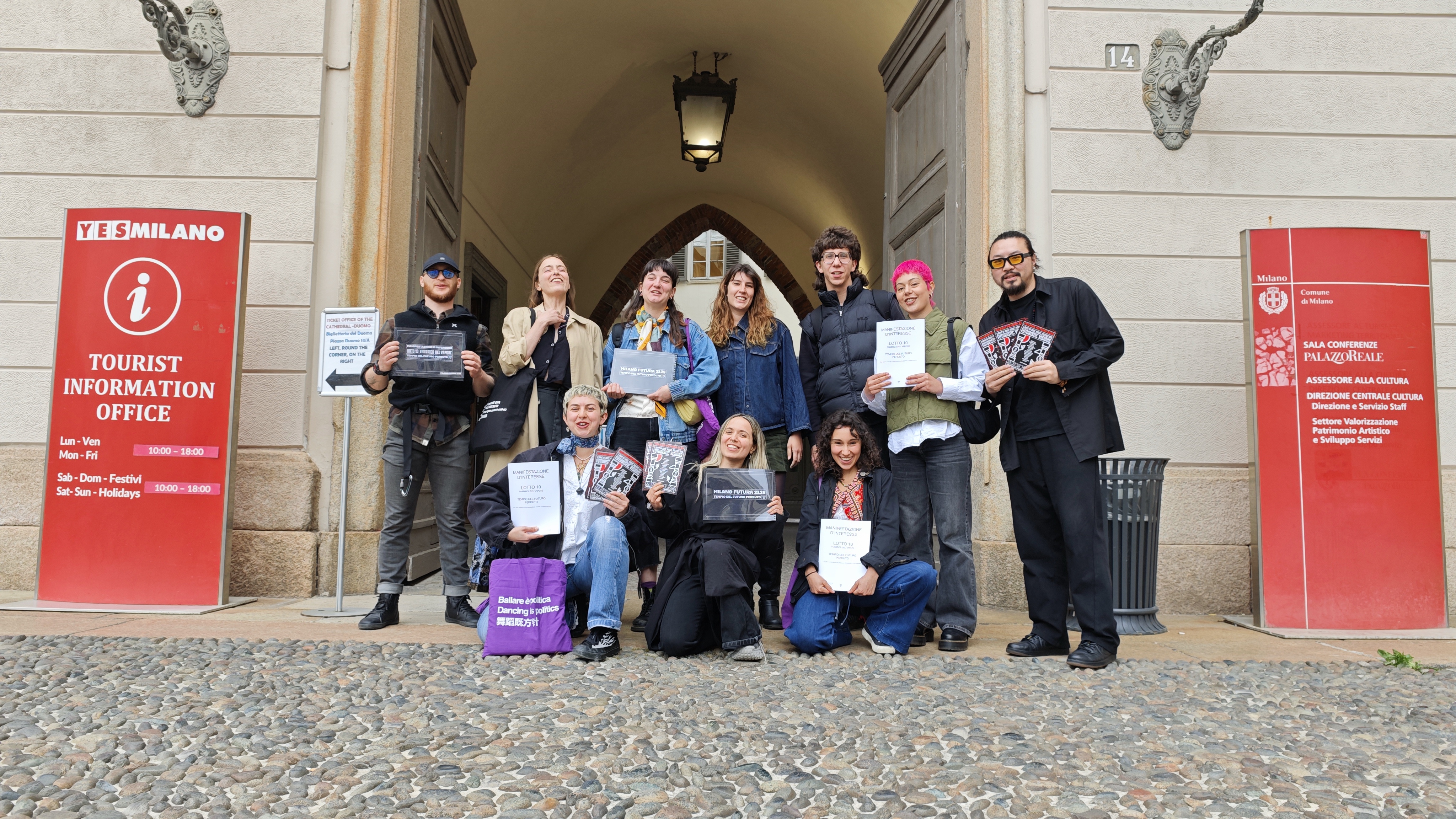
Tempio del Futuro Perduto (Milan)
Il Tempio has sought to go beyond the very concept of the disco by building an ecosystem in which electronic music, contemporary art, radio, schools, workshops, cultural welfare, mutualism and urban planning coexist within the same space. In this model the night out is a tool for producing culture and sustaining a permanent community, not the goal of the organization.