There's a mainstream narrative that keeps portraying Italy's social centers as one of the country's principal sites of political and cultural resistance. A narrative that, perhaps, held true thirty years ago, but today looks increasingly distant from reality. Because the truth is that Italy's social centers, as they were originally conceived and built, are dead. And they probably died somewhere between 2001 and 2012.
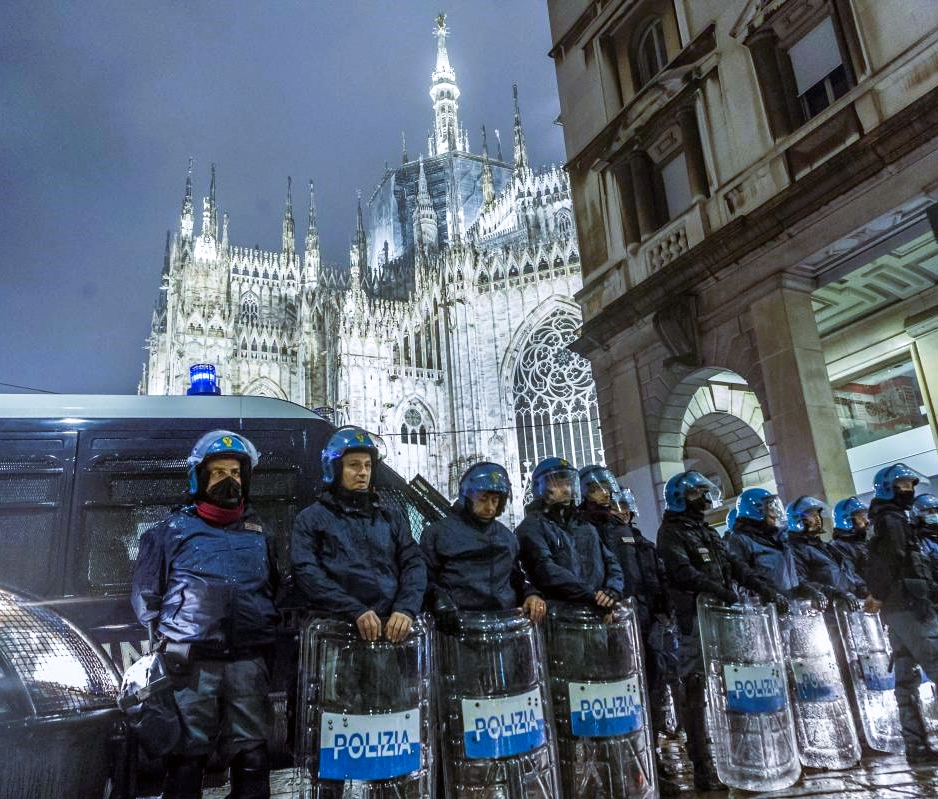
The Genoa G8 wasn't just a political watershed for Italy. It was the trauma that definitively broke a generation of activists. After that crackdown, after the killing of Carlo Giuliani, after the torture at the Diaz school and the Bolzaneto barracks, a huge part of the movement simply stopped existing. Some left activism behind, others "went to work," others still kept resisting within their own spaces, but without that collective force that had defined the Eighties and Nineties.
Add to this the fact that for at least two decades social centers were progressively delegitimized in public debate. A significant part of politics and media consistently described them exclusively as places of illegality, decay, violence or privilege, systematically obscuring the cultural, mutual-aid and social activities that had defined many historic experiences. The effect was obvious. Social centers progressively lost popular support, stopped being perceived as spaces crossed by slices of the city, and became increasingly closed-off, self-referential realities, incapable of speaking to the outside world.
For many years, social centers had been, for better or worse, the people's spaces. Perhaps the true heirs of the historic tradition of the Case del Popolo. Students, workers, artists, families, the curious, activists and neighborhood people all walked through their doors. They were spaces crossed by society itself. When that bond broke, their main political strength went with it. Without a living relationship with their surrounding territory, many of these places ended up surviving mostly for their own sake, slowly consuming the human and cultural inheritance built by previous generations.
Between 2001 and 2012, a generation of survivors carries on.

People who keep these social spaces open through enormous effort, often without generational turnover, with ever fewer economic resources, and in a political context that has by now completely changed. It's a decade of resistance rather than expansion. Social centers no longer grow: they simply try to survive.
And this, in my view, is where the point of no return happens.
New experiences emerge that keep the language and aesthetic of social centers, but progressively abandon many of their founding principles.
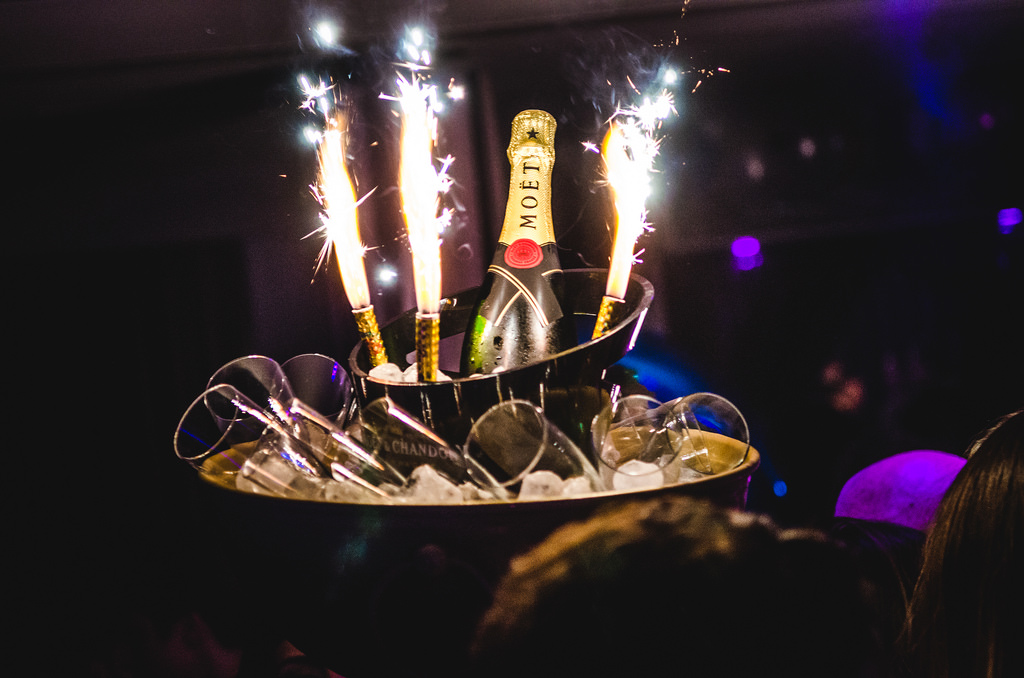
In Milan, Macao probably becomes the clearest symbol of this transformation. More than a site of organized activism, Macao ends up representing a new kind of centrality for creative production, entertainment and Milan's nightlife. It draws in the contemporary art world, fashion, and plenty of after-parties, becoming one of the most frequented spaces for a generation that often experiences occupation more as a playful, performative experience than as political practice.
This shift profoundly changes the very meaning of "social center." Harm reduction gives way to a growing normalization of hard drug use; the idea of a protected, communal space weakens; instances of decay and insecurity increase — things that many activists of the previous generation would have considered unacceptable and incompatible with the social function of these places.
"Is this supposed to be the example of a better world?"
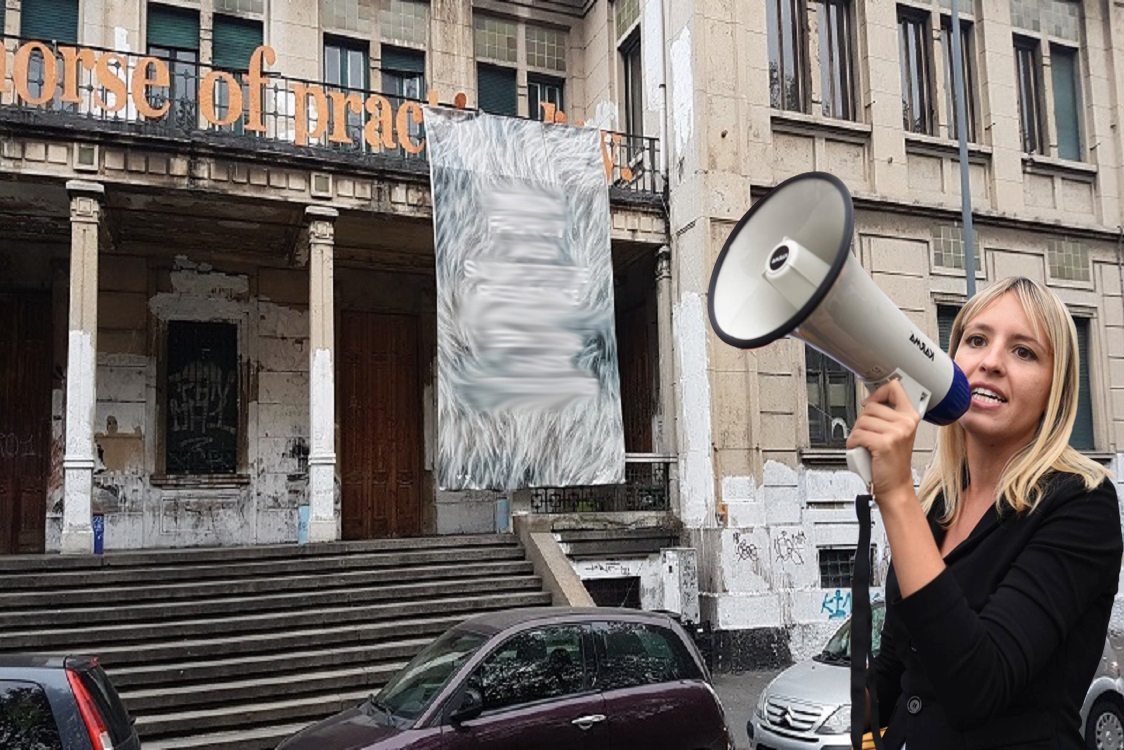
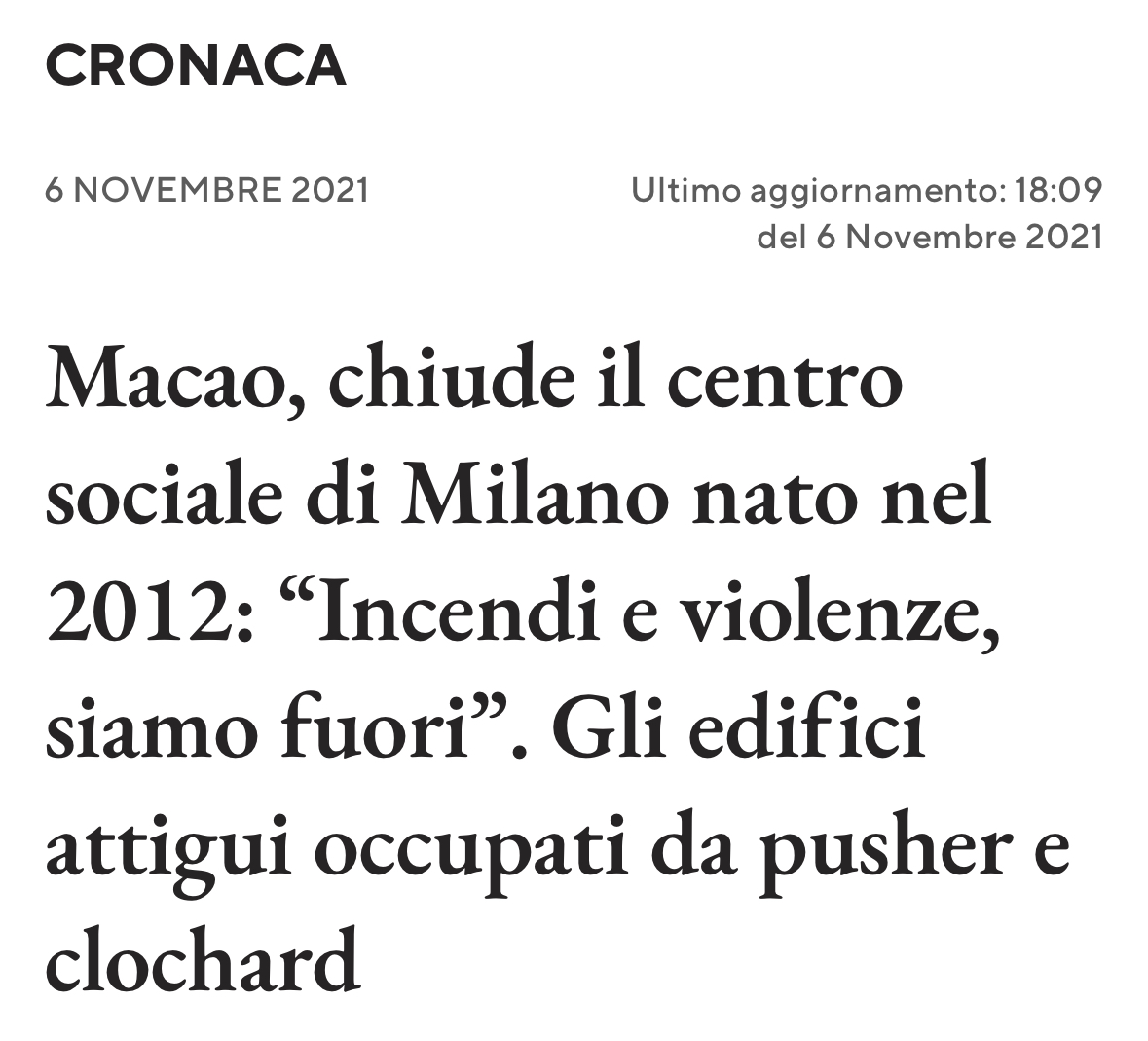
There's another element worth reflecting on. Despite nearly a decade of occupation, Macao hasn't seen a level of legal conflict comparable to what characterized nearly all social centers in the Eighties and Nineties. For some, this is the sign of a deeper transformation: a space that is less and less genuinely antagonistic or confrontational, and more and more — if informally — a component of today's "Milano da Bere," while still keeping the aesthetic and the shouted tones of "okkupazione."
Historic social centers weren't just occupied spaces. They were political schools, communities, mutual-aid networks, places with shared rules, internal discipline, collective responsibility. You could agree with those rules or criticize them, but they existed. The very idea of a «liberated space» implied that whoever ran it took on political and moral responsibility for what happened inside it. With Macao, that idea seems to have been lost.
Meanwhile, the relationship with institutions changes profoundly too. The Leoncavallo case is perhaps the most emblematic. For decades it was told as the symbol of Italian antagonist autonomy. And yet, looking at its history, a different reality emerges: few social centers have developed such a continuous relationship with institutions. From dialogue with municipal administrations to the fact that several protagonists of its history went on to hold important roles and offices within city and national institutions, Leoncavallo progressively became part of the very political system it was, at least in theory, supposed to challenge.
«This isn't necessarily an accusation: for some it represents a political victory; for many others, instead, it's the sign of a complete submission to the establishment.»
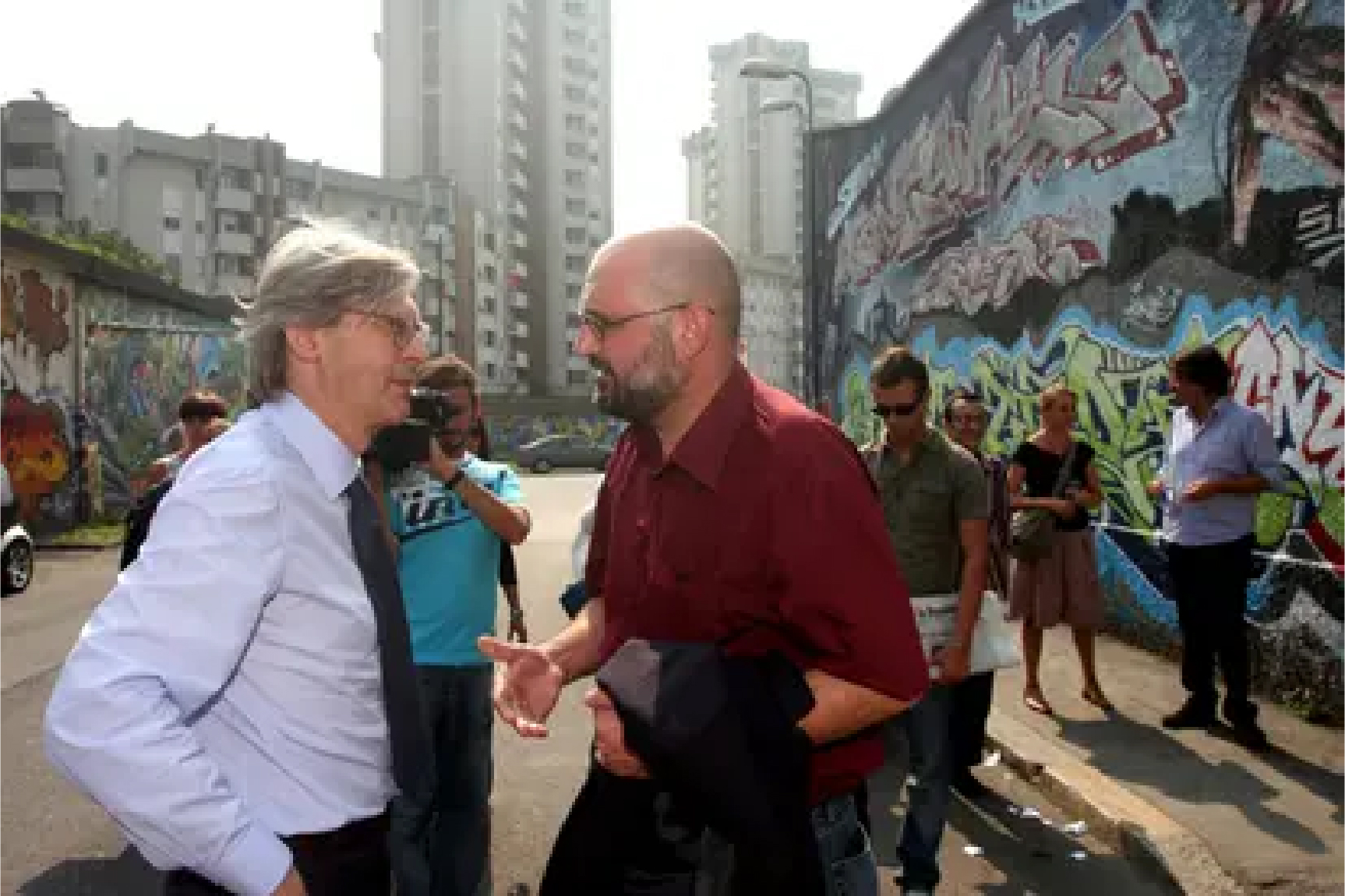
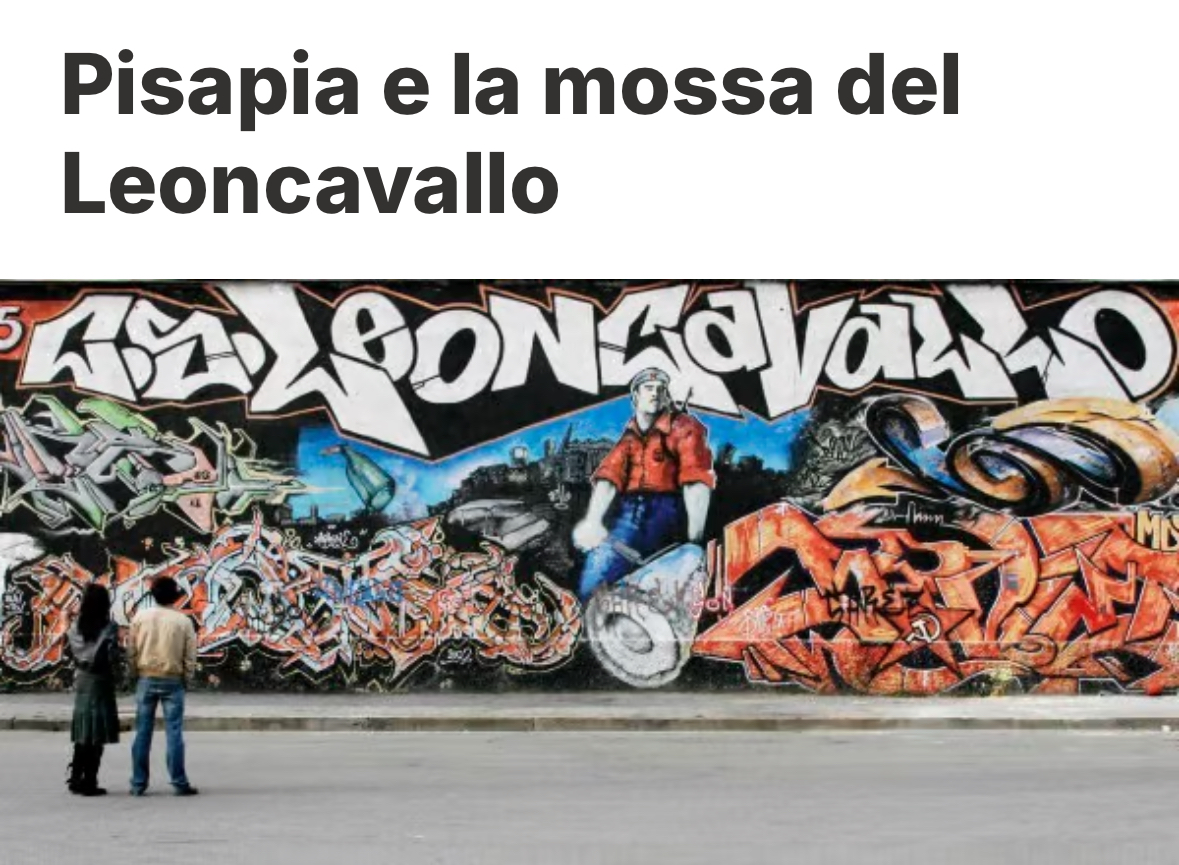
The paradox is that, here too, while social media kept projecting an image of permanent radicalism, in practice Leoncavallo had by now become one of the most institutionalized spaces in the entire Italian landscape.
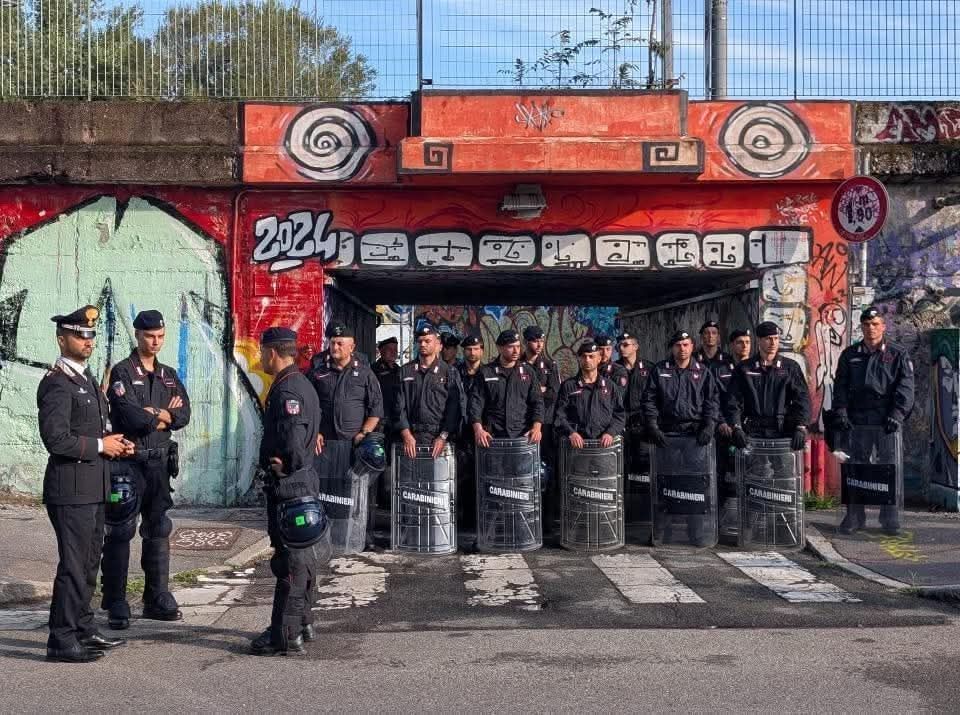
This was visible in the hardest moments too. When the recent eviction happened, there was no citywide or national mobilization comparable to those of the past. The episode was read by many as a symbol of the movement's lost organizational capacity and lost roots. The claim that many activists were absent because they were on vacation is a polemical narrative that circulated in public debate, one that captures the mood of those days well. But the political fact remains: an eviction that, only twenty years ago, would probably have sparked a "revolution," today produces a collective response that is sterile, performative, and perfectly compatible with the world of social media.
Of course, these weren't the only possible paths. Out of the crisis of social centers, projects were also born that tried to preserve some historic principles while accepting that the context had by now completely changed.
Perhaps the most representative case is Tempio del Futuro Perduto. The Tempio too is born within this cultural tradition, inherits much of its language, and shares the idea that a social space should produce culture, mutual aid, education and community. At the same time, though, it makes a different choice: it openly acknowledges that in the 21st century an independent space can't survive through «okkupazione» alone, but must also be able to produce culture, live events and economic sustainability, like the European models, without giving up its social function.
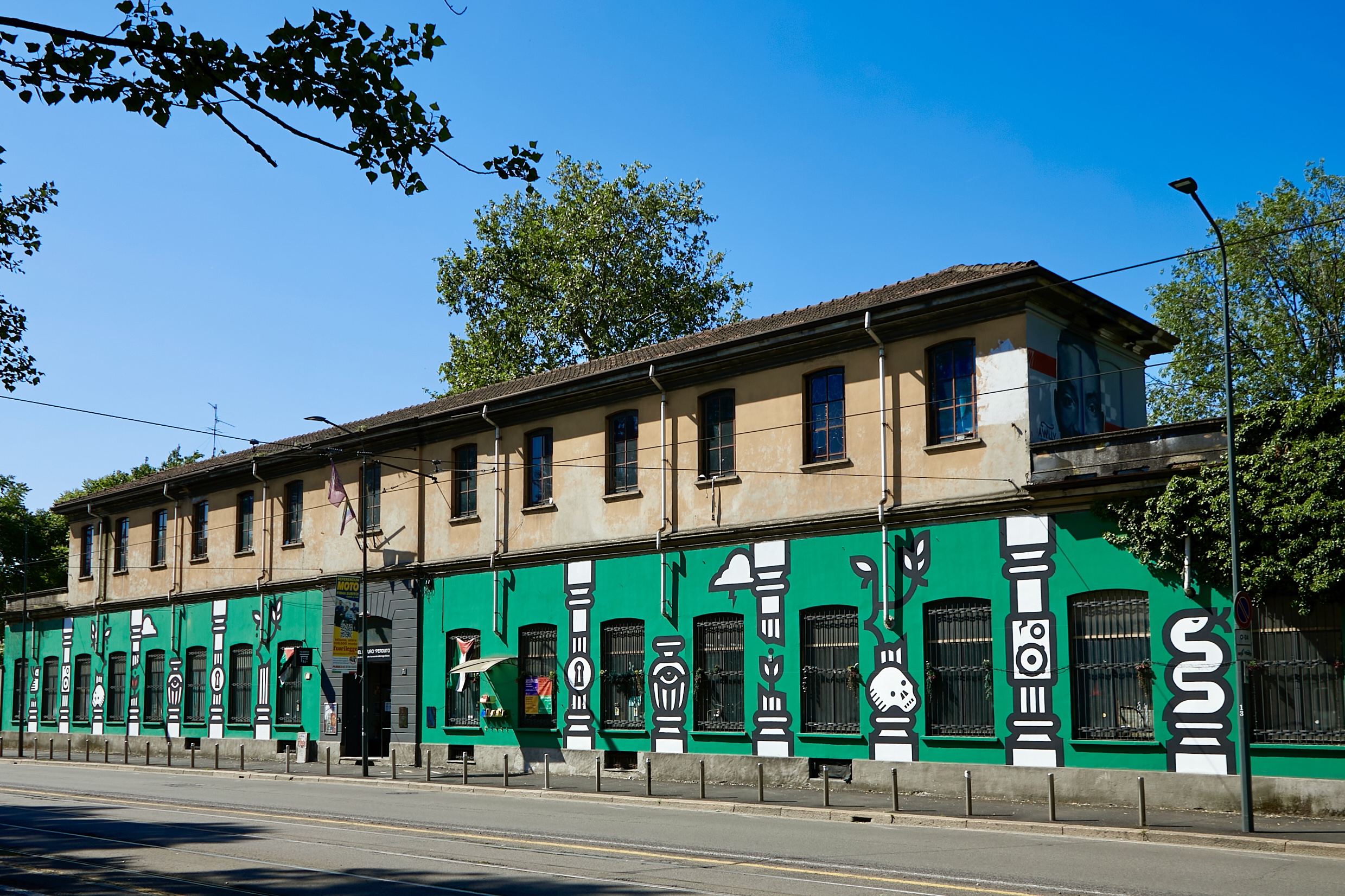
The goal isn't to turn art into a commercial product, but to use the tools of cultural organization to fund activities that the market, on its own, would never support: free and accessible schools, social projects, educational activities, artistic programs, gathering spaces and mutual-aid initiatives. In this view, music and events aren't the end goal of the project, but the means that make everything else possible.
The difference isn't just about the economic model, but also about the responsibility toward the people who pass through these spaces. If a social center claims to be a community, it must also take on the task of making that community as safe, accessible and sustainable as possible. Freedom can't be separated from collective responsibility. Maybe the problem isn't that social centers are finished. The problem is that many kept describing themselves in the language of the twentieth century while the world had already changed. Others, instead, tried to redefine that tradition, keeping its spirit while changing its practical tools and aesthetic.
So what now? Maybe everything has changed — but not everything is lost.
Social media have profoundly changed the way politics is done. Activism has increasingly become an individual identity construction, a permanent communication, a public self-representation. Activism is often measured through published content, the language used, the position taken online. The performative dimension has progressively replaced the organizational one.
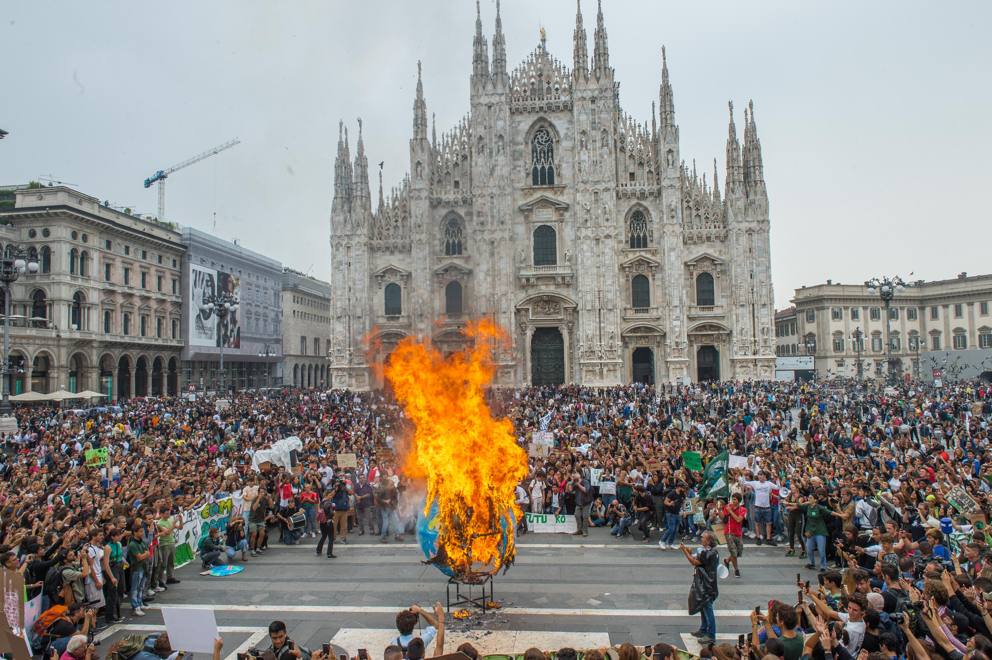
In the meantime, the great collective belongings have also dissolved. Unions, parties, collectives, associations and social centers are no longer the places where people build their political identity. That identity is now built individually, through algorithms, digital platforms and communities increasingly oriented toward aesthetics.
In this scenario, perhaps, social centers weren't simply defeated. They lost the cultural ground on which they were born. They were tools designed for an analog world, built on physical presence, territorial community, everyday activism. Today that world no longer exists.
And maybe this is exactly the question we should have the courage to ask: does it still make sense to try to rebuild the social centers of the twentieth century, or would it be more useful to imagine new forms of collective organization, capable of responding to the conflicts and needs of the 21st century?
Continuing to claim that Italy's social centers are still the heart of counterculture risks blocking this reflection. Because before building something new, you have to have the courage to recognize when a historic experience has reached its conclusion. It's called intellectual honesty.
Maybe Italy's social centers aren't dying.
Maybe they died a long time ago.
And almost no one has had the courage to say so.
Yes, but what's happening in 2026?
Of course, every generalization leaves out important experiences. Even today there are realities that, despite enormous difficulties, continue to hold their ground, producing culture, mutual aid and everyday political organization.
In Milan, il Cantiere continues to represent one of the most authoritative movement laboratories on both a national and citywide scale, able to weave together housing rights, student mobilizations, independent culture and political organization.
SMS – Spazio di Mutuo Soccorso has built, over the years, a concrete model of mutual aid, with social help desks, grassroots activities and deep local roots.
Il Lambretta continues to show that it's still possible to build community through self-management, while COX18, with its long history, remains one of the most important symbols of Italian cultural autonomy and of the ability to bring together independent publishing, the arts, music and critical thought.
In Rome, Spin Time Labs has managed to turn a huge housing occupation into a permanent laboratory of solidarity, cultural production and services for the city, showing how the right to housing can coexist with intense artistic and social activity.
In Naples, Officina 99 continues to be a historic point of reference for antagonism at both city and national level, while the Ex OPG – Je so' Pazzo has managed to renew the very concept of the social center, building one of the most articulated mutual-aid experiences in Italy through grassroots clinics, social help desks, educational activities and cultural initiatives.
In Florence, CPA Firenze Sud represents one of the longest-running examples of self-management still in existence, able to maintain, over the years, a strong political identity without giving up its roots in the local area.
In Turin, the Askatasuna collective, even after losing its historic space, continues to represent a point of reference for a significant part of the city's social movements, showing that a concrete political community can survive even when it loses the physical place that gave birth to it.
Precisely because these experiences exist, it's important to distinguish them.
The argument in this article isn't that every social center has abandoned its function. It argues something different: that the social-center movement, as a broad cultural and political phenomenon capable of speaking to an entire generation, has by now concluded its historical cycle.
Realities like these show that spirit can still exist, when it manages to stay rooted in its territory, useful to people and capable of building real communities. Today, though, they represent the exception, not the rule anymore.