For many people dance is spectacle. For Urban Dancing Prophets it is a political language.
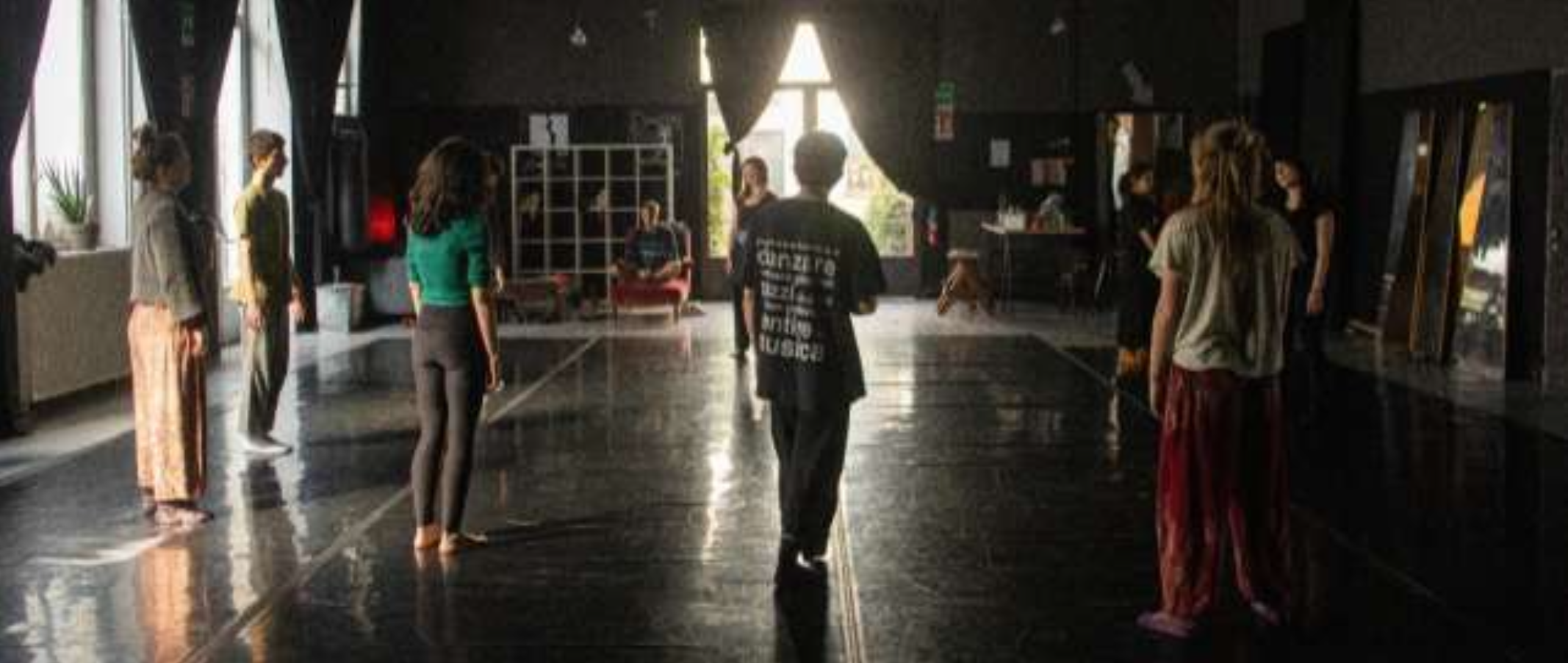
Born within Sala Nera, the space dedicated to the performing arts at Tempio del Futuro Perduto in Milan, Urban Dancing Prophets is a resident collective of dancers and performers who use the body as a tool for artistic research, social transformation and community-building.
Their performances move through clubs, theatres, museums, squares, public demonstrations and abandoned spaces, continually shifting between contemporary dance, ritual, improvisation and electronic culture.
But what does it really mean to talk about "political dance"? And what relationship exists between the movement of the body, techno music and activism?
We spoke about it with Urban Dancing Prophets.
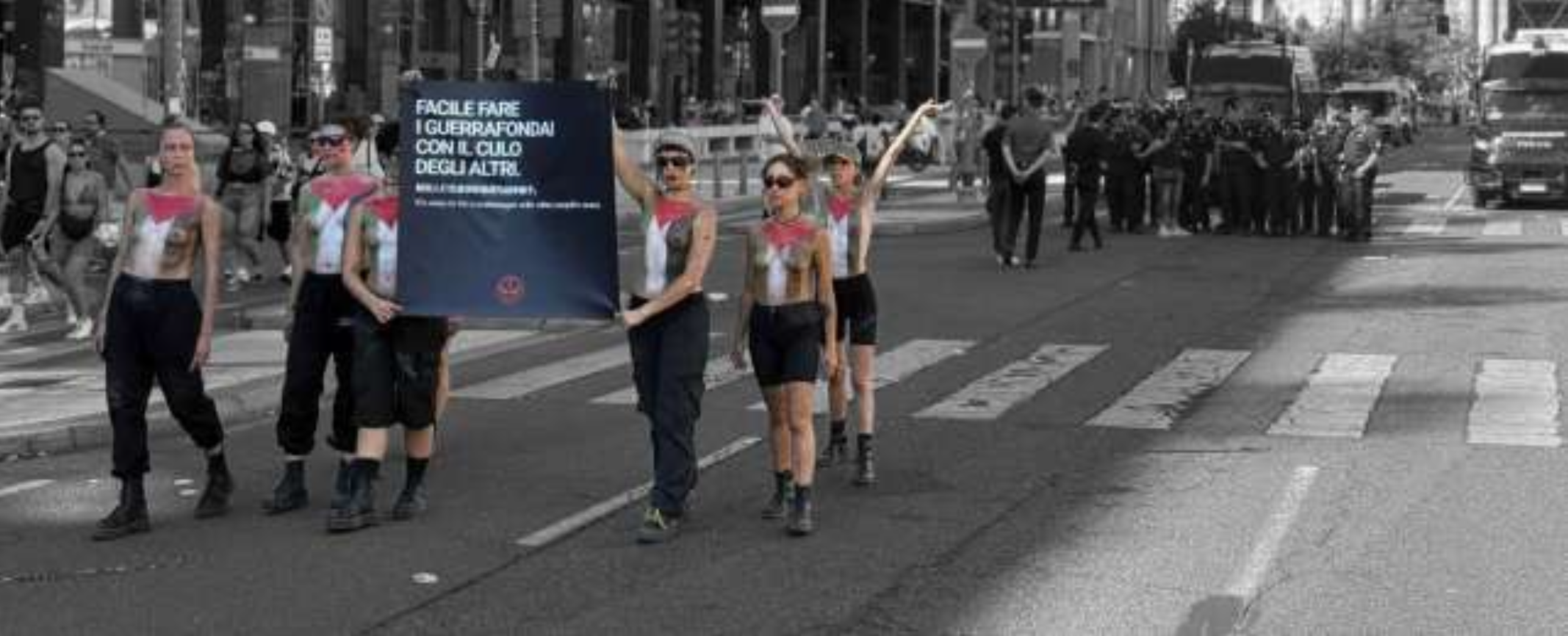
1. Why do you call your dance "political"?
Let's start from the premise that the body has a universal language. And as such, it can communicate to everyone.
Today, with the world burning and tearing peoples apart, confusing and weakening people, doing politics is extremely necessary, but politics is often commonly understood as a field of study that only a few intellectuals can engage with. For us, however, it's important to make clear that everyone, absolutely everyone, must be included in this necessity.
We speak to the people. We dance for and with the people. That's the difference. The body is the tool that everyone possesses and can feel and interpret, and as such, it is truly accessible. Our dance is political because it starts from this premise.
With dance we are convinced that we can produce change. We are convinced of this also because we see it happen. Every time we dance, something happens. There is always someone who tells us they saw or felt something that was perhaps already inside them, but that hadn't yet found a way to emerge. Dance works exactly on this. It forces you to listen, to leave space, to take responsibility for what you feel and, consequently, for others. For us, this is already politics.
"The body is the tool that everyone possesses and can feel and interpret, and as such, it is truly accessible. Our dance is political because it starts from this premise."
2. What is the relationship between the body and politics?
Well, if politics concerns the way we choose to live together, the body is the place where this choice truly becomes concrete. If we think about class struggle, the struggle for intersectional rights, migrants, war, access to care and health, we are always talking about bodies: who can or cannot move freely, inhabit a space, love, rest or live without fear.
Every form of power passes through the body. It disciplines it, protects it, exploits it, silences it, or allows it to express itself.
So when a community returns to feeling its own body, it also returns to questioning the way it wants to inhabit the world and the responsibility it has toward others.
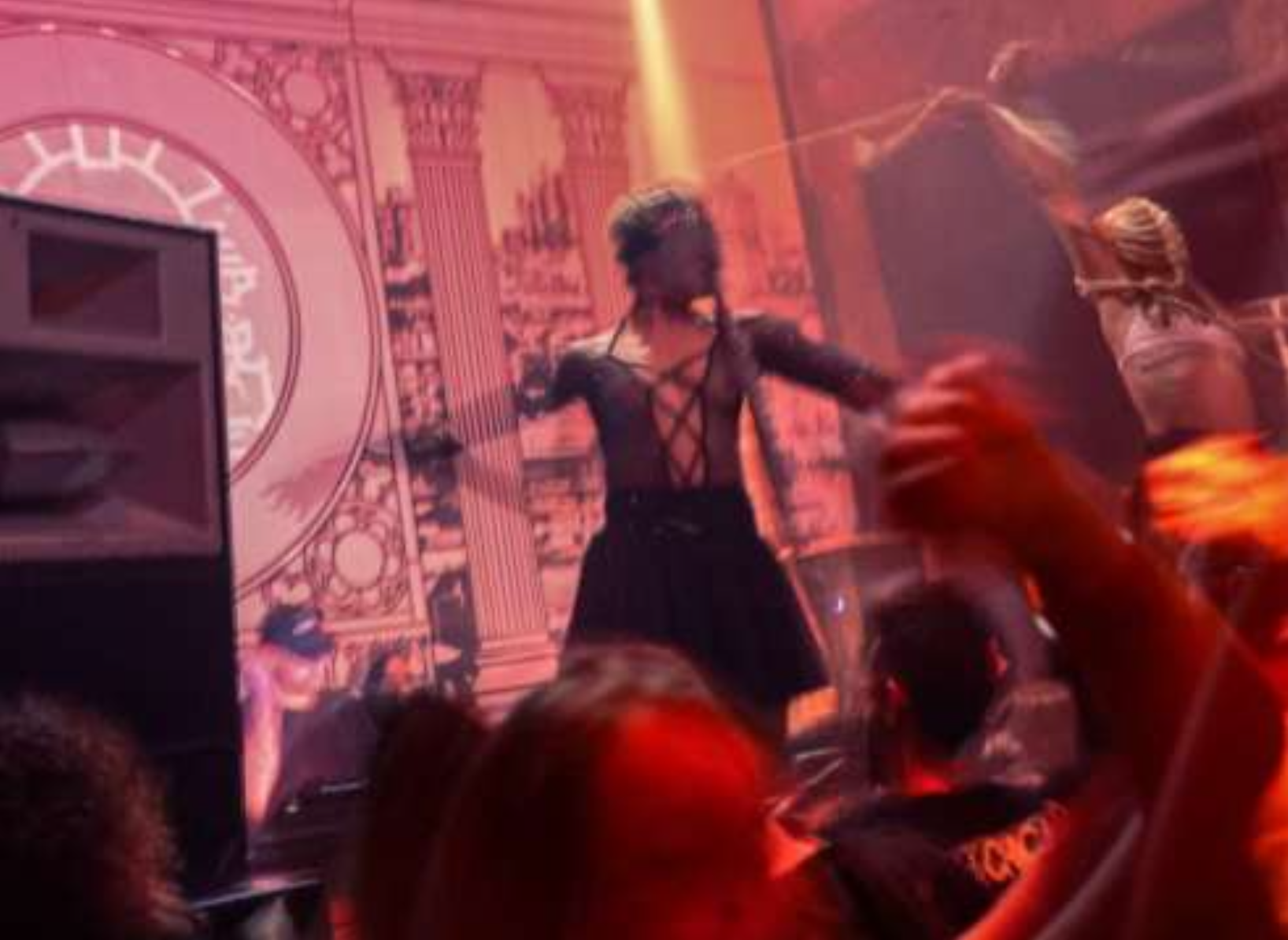
3. Your "Nocturnal Rituals" have become one of the experiences that most represent you and have led you to perform in various international contexts. What are they?
Nocturnal Rituals are hybrid performances between contemporary dance and techno music. They were born from the desire to bring contemporary dance into clubs: places where everyone dances, but where people rarely pause to observe the language of the body. Through a strong component of improvisation we enter into dialogue with the dancefloor. Sometimes from the stage, behind the sound, other times right in the middle of the crowd, never interrupting the party, but letting the energy continue to circulate between performers and audience.
Each Nocturnal Ritual comes to life through figures inspired by a cyberpunk imaginary, which allow us to address different themes each time. We work with the body, presence and the relationship that is created in that precise moment, making each performance different from the previous ones: it changes with the music, with the space and with the community that moves through it.
What we try to create is a collective cathartic experience, in which the boundary between those who watch and those who dance dissolves. It is in that moment that the club becomes, for us, a place of encounter, expression and transformation.
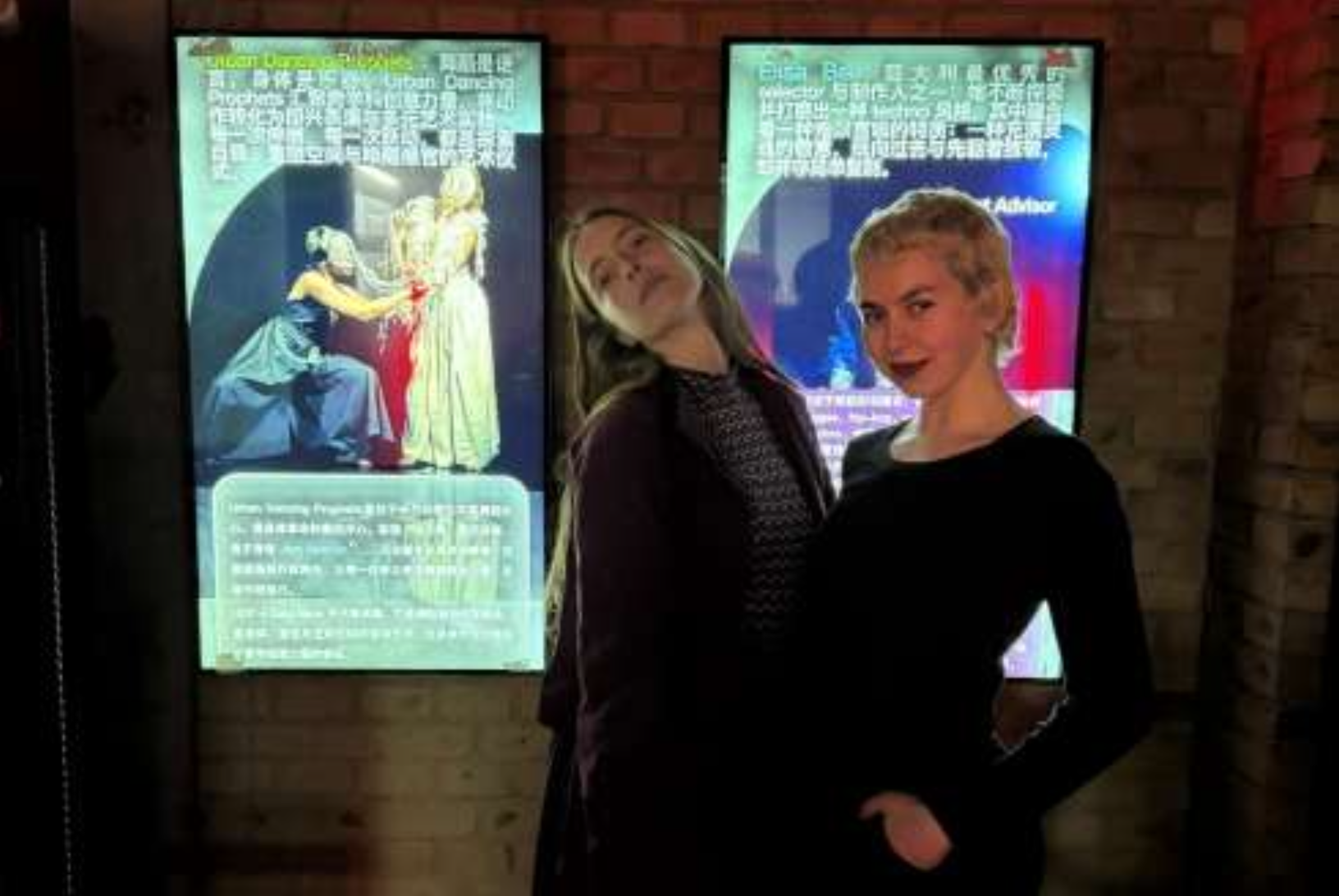
In recent years the Nocturnal Rituals have taken us to perform in various international contexts, including two tours in China. It was surprising to discover that, even as language and culture change, this dialogue between body, music and dancefloor manages to create an immediate connection everywhere.
4. Why did you choose techno culture specifically as the ground for your research?
Techno is one of the few contemporary cultures that continues to politically place the body at the centre. In an era in which everything is fragmented, accelerated and superficial, techno gives us back the possibility of remaining within a shared experience for hours, in which hundreds of people breathe, move and listen to each other together. It is a form of cultural resistance.
We're especially interested in its ritual dimension: repetition, rhythm and long duration allow us to build trust, to slowly enter a state of presence that in everyday life we have almost forgotten.
Some of us also come from rave culture. A culture often told only through its excesses, but that in reality has been able to produce extraordinary experiences of self-organisation, mutual aid, freedom and temporary coexistence. In that cultural heritage we found much more than an aesthetic: we found a political practice and an expression of the collective self.
"Techno is one of the few contemporary cultures that continues to politically place the body at the centre."
5. So what is a contemporary ritual?
Today, in our view, rituals are necessary practices for training communities in awareness and memory: who we are, what we share and which values we choose to safeguard. Rituals have always accompanied human societies; over time we've lost the habit and custom of them, but we believe they still have a fundamental function. Many of the shared rituals that once marked the rhythm of collective life have weakened, and have not always been replaced by experiences capable of creating the same sense of belonging. That's why we try to build new ones. A performance in a square, a collective dance, a rave, a secular procession, a flashmob, a listening practice can become contemporary rituals if they manage to transform, even just for a few hours, the way a community experiences itself, in its relationship with the Other and with space.
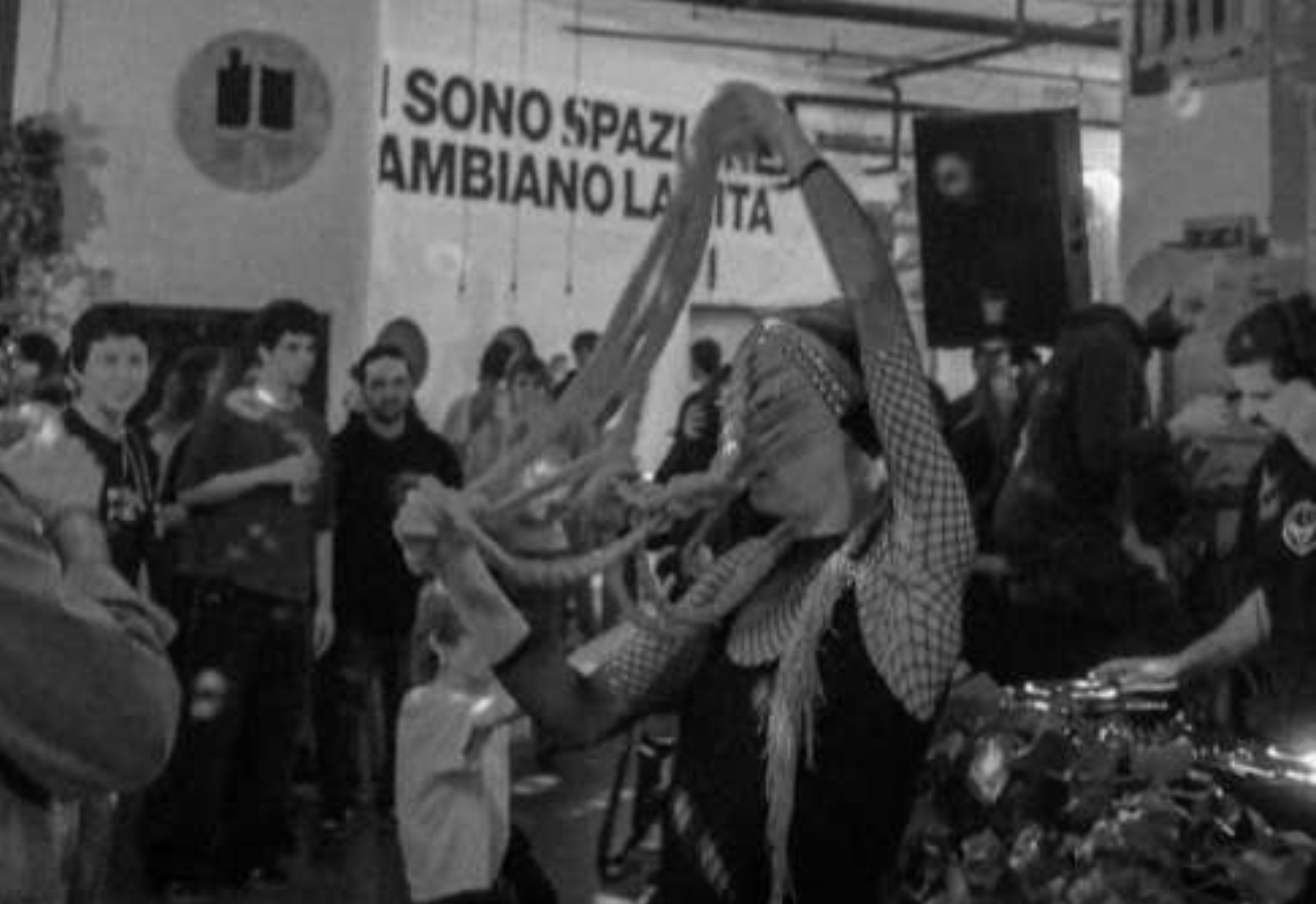
6. How does one of your performances come about? From a political idea, an image or from movement?
Our performances almost always come from a question we feel is urgent. Every work begins by asking ourselves what transformation we would like to produce in people and in the space. From there the research opens up: gradually the movement, the music, the dramaturgy and the images arrive, but we never know exactly what will happen. This openness is part of the work.
The choreographic structure, then, is the way in which that question takes shape. And we do this almost always through improvisation: a space of freedom and mutual listening in which every dancer can bring something of themselves. So every performance becomes truly unrepeatable and unique.
7. We live in an era dominated by screens. What does this mean to you?
Screens have given us incredible possibilities, but they have also accustomed us to experiencing the world almost only through sight. The body, on the other hand, can know many more things: weight, rhythm, distance, contact, breath, fatigue, balance, trust.
Bringing the body back to the centre means remembering that we are relational beings before we are users, consumers or spectators. It means restoring complexity and beauty to human experience.
8. Your performances often take place in public space. Why leave the theatre?
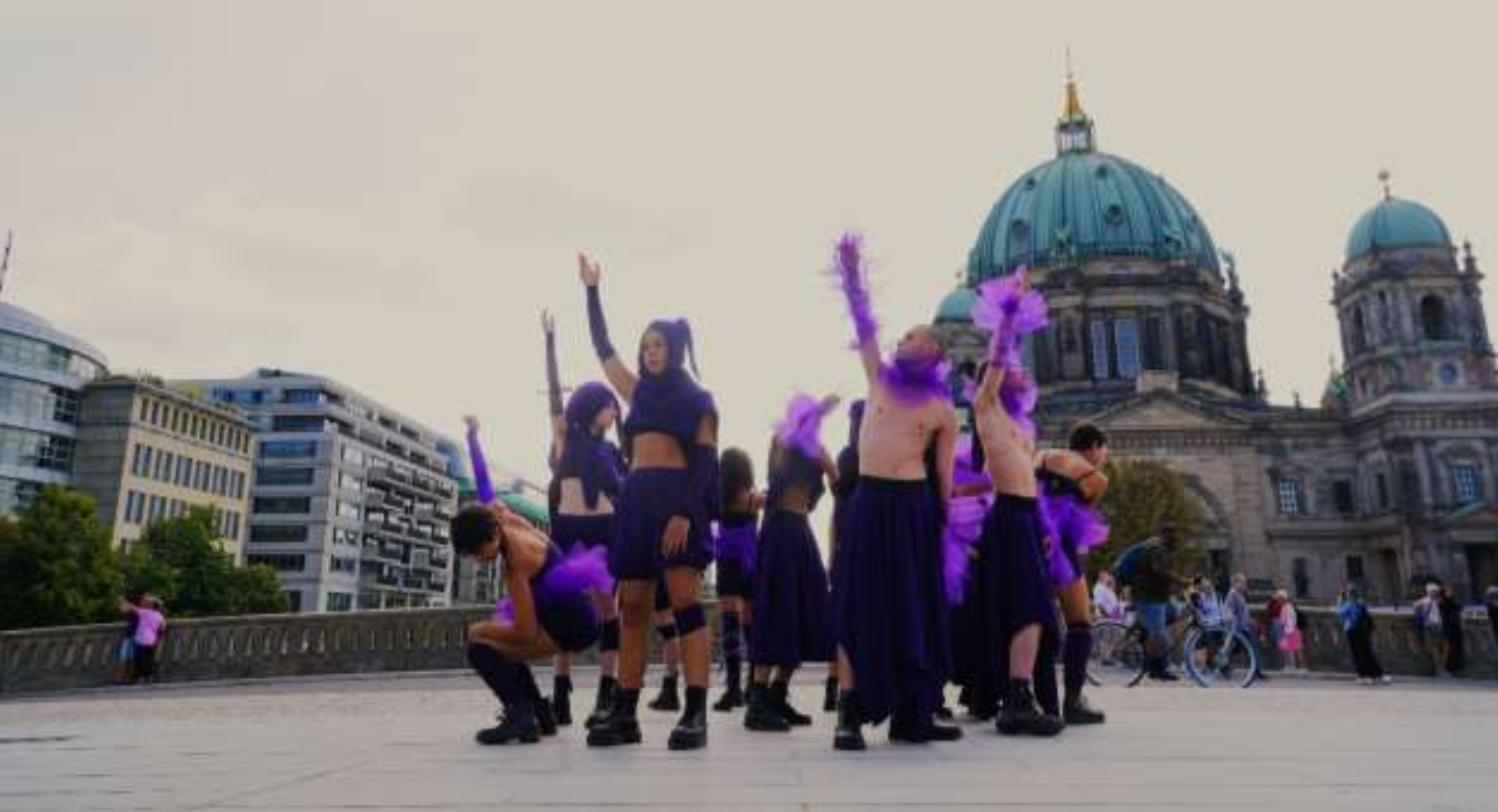
Performance is a tool through which a community can imagine itself differently: it can, that is, become a social infrastructure. Every time we dance together in the street, for example, we are experimenting with an alternative form of coexistence. For a few minutes we suspend the usual rules of space, time and relationships: a small exercise in a possible future, which makes it already real.
Moreover, public space belongs to citizens, but too often we experience it only as a place of passage. Our performances try to give it back a different function: that of a place of encounter, imagination and relationship. The theatre is a precious space, but whoever enters has already decided to take part. Public space, on the other hand, also belongs to those who don't expect to encounter art.
9. Many of your works address social and civic themes. What is the role of art in the face of present-day conflicts?
Art, for us, should not tell people what to think, but rather create the conditions for them to return to feeling and critically developing their own thought.
We are continually crossed by information, images, opinions, and we risk becoming permanent spectators of the world's pain. Art has the power to interrupt this anaesthesia.
Dance doesn't want to replace politics, because politics has the arduous task of transforming institutions and material conditions. But it can prepare the ground, transforming the way people perceive, look at and inhabit the world. When we create a political performance, we don't want to limit ourselves to taking a stand, but also and above all to create an experience that makes it impossible to remain indifferent and that stays with people even after the performance has ended.
For us, art also has the task of bringing beauty back into people's eyes, not to make the present more bearable, but to remind us that another way of living and imagining the world is possible.
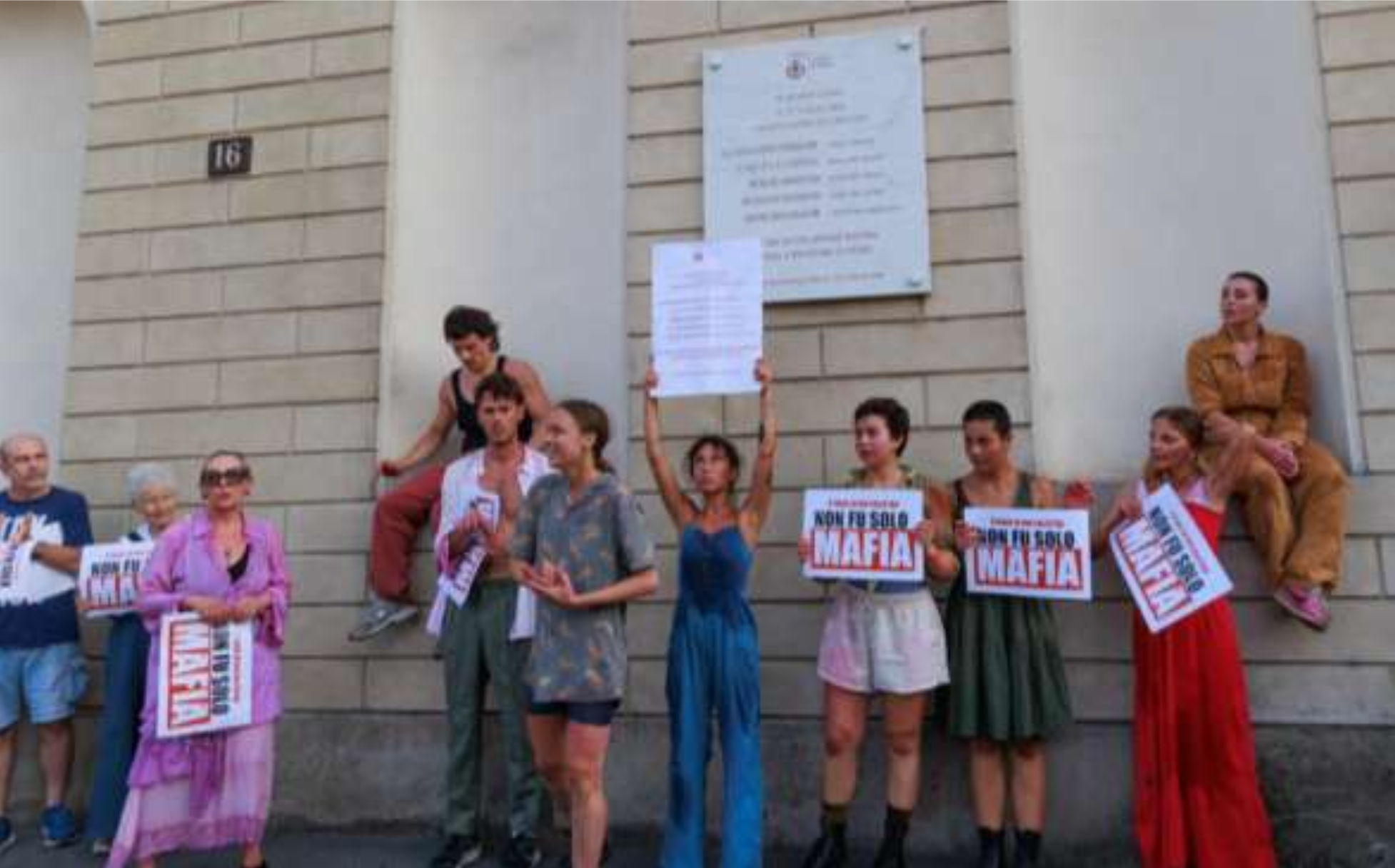
10. Your work often talks about community. How is community built through movement?
This is our biggest challenge, and it's still open. We believe a community isn't born when people think the same way, but when they go through truly meaningful experiences together. When two people dance together, for example, they must continually listen to each other. They must leave space for the other, adapt, trust, take on mutual responsibility. It's an exercise that, unknowingly, also trains us to live together.
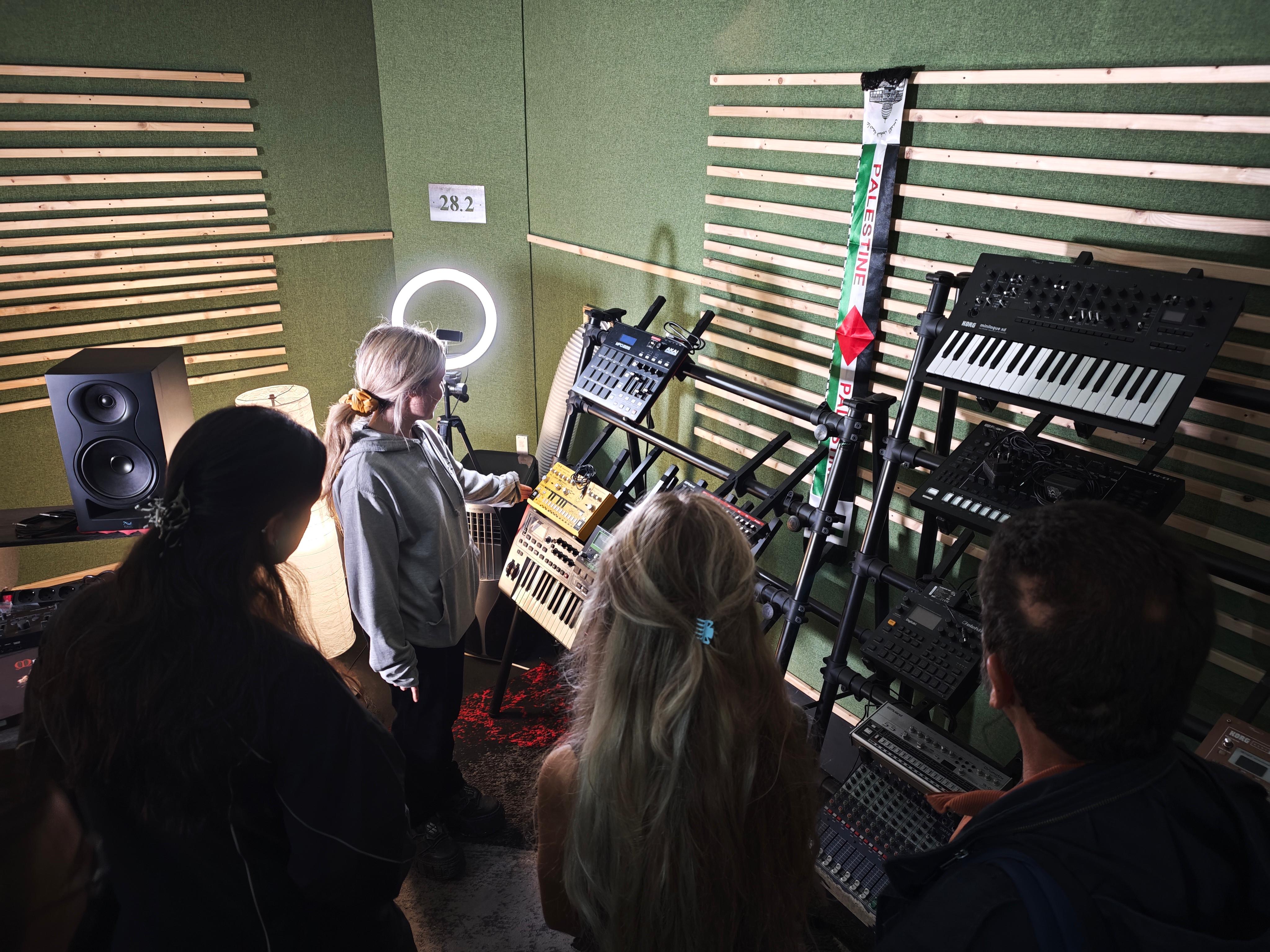
At the Tempio we use dance, electronic music and performance to take care of shared public space, relationships and the collective imagination. But that's not enough on its own; first of all, in fact, the dimension of effort and doing is fundamental: we set up, take down, clean, cook, wait, rejoice and suffer together. Movement is constant, and requires a great deal of individual and collective effort and work.